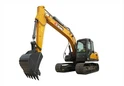
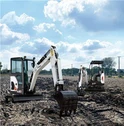
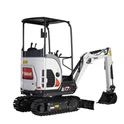
Hey there! As a supplier of VOLVO Excavators, I often get asked about the operating weight of these bad - boys. You know, the operating weight of an excavator is super important. It affects everything from how stable the machine is on the job site to how much it can lift and move.
Let's start with the basics. The operating weight of an excavator includes the weight of the machine itself, the fuel it's carrying, the operator, and any attachments that are currently installed. Different models of VOLVO Excavators have different operating weights, and that's because they're designed for different jobs.
First up, let's talk about the VOLVO EC480D Excavator. This is a heavy - duty machine built for big - scale construction projects. The operating weight of the VOLVO EC480D Excavator is around 49 tons. That's a whole lot of metal and machinery! With such a high operating weight, it can handle large - volume earthmoving tasks with ease. Its heavy weight also gives it great stability, which is crucial when you're working on uneven ground or lifting heavy loads.
Then we have the VOLVO 200 Excavator. This is a mid - sized excavator that's very popular among contractors. The operating weight of the VOLVO 200 Excavator is approximately 20 tons. It's lighter than the EC480D, but don't let that fool you. It's still a powerful machine that can get a lot of work done. It's more maneuverable than the larger models, making it a great choice for jobs in tight spaces or where you need to move around a lot.
Another well - known model is the VOLVO EC55 Excavator. This is a compact excavator, and its operating weight is about 5.5 tons. It's perfect for small - scale projects like landscaping, utility work, or working in residential areas. The light weight makes it easy to transport from one job site to another, and it can operate in areas where larger machines just won't fit.
Now, why does the operating weight matter so much? Well, for starters, it affects the machine's performance. A heavier excavator can usually lift more and dig deeper. But it also needs more power to move around, which means higher fuel consumption. On the other hand, a lighter excavator is more fuel - efficient and easier to maneuver, but it may not be able to handle the same heavy - duty tasks as a larger one.
When you're choosing an excavator, you need to think about the type of work you'll be doing. If you're working on a large construction site where you need to move a lot of dirt and rocks, a heavier machine like the VOLVO EC480D might be the best choice. But if you're doing smaller jobs or need to work in confined spaces, a lighter excavator like the VOLVO EC55 could be more suitable.
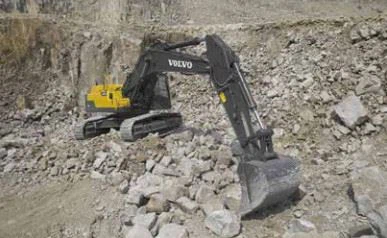

Also, the operating weight can impact the transportation of the excavator. You need to make sure that your transport vehicle can handle the weight of the excavator. If you try to transport a too - heavy machine on an inappropriate vehicle, it can be dangerous and may even cause damage to the equipment or the transport vehicle.
As a VOLVO Excavator supplier, I've seen firsthand how important it is for customers to understand the operating weight of these machines. It helps them make the right choice for their projects and ensures that they get the most out of their investment.
If you're in the market for a VOLVO Excavator, I'd be more than happy to help you. Whether you need more information about the operating weight, want to compare different models, or are ready to make a purchase, I'm here to assist. Just reach out, and we can start the conversation about finding the perfect excavator for your needs.
References
- VOLVO Excavator official product manuals
- Industry reports on construction equipment performance